


All gave some, some gave all
Military honors at a funeral are a heartfelt way for the Nation to thank the service members for their service.
Military service changes people in ways few others fully understand.
For many families, military honors are one final act of gratitude…
That includes Cold War veterans, peacetime veterans, sailors, airmen, Marines, Coast Guard, National Guard, and Reservists—not only combat veterans.
For many families, military honors are one final act of gratitude — a moment when a nation pauses to recognize sacrifice, duty, and service. Whether the service member served during war or peace, the sound of Taps, the folding of the flag, and the quiet dignity of military ritual often become unforgettable moments for loved ones.”
Choosing cremation does not affect eligibility for military funeral honors. Veterans who are cremated may still receive the same honors traditionally associated with casketed burials.
Who Qualifies for Military Honors?
 Military funeral honors are generally available to:
- Active-duty military members
- Military retirees
- Veterans honorably discharged
- Some members of the National Guard and Reserves
- Families are typically asked to provide a copy of the veteran’s DD Form 214 or other discharge documentation verifying honorable military service.
 Military honors are more than ceremony. They are an expression of gratitude from a nation to a service member. Families often remember the sound of Taps, the presentation of the flag, and the dignity of the guard of honor after other details of the funeral have faded.
What are the steps in a Columbarium funeral?

At Walker Chapel Historic Cemetery, military honors are conducted among towering trees, historic stone walls, and the quiet beauty of sacred grounds that have served generations since the 1800s.
The military honors cremation followed by inurnment may have the following steps:
Funeral Service
A funeral service is held in a church or other venue, then moved to the cemetery. At Walker Chapel, a beautiful service celebrating the life of the deceased is well-attended and may include prayers, music, a sermon, and stories told by family members.
Arrival
The cemetery representative meets the family and guests and conducts them to the interment service area or directly to the columbarium niche. The setting may be simple or include a large canopy in case of inclement weather.
Graveside Service
In a full setting, there is usually a graveside service, which may be abbreviated if it follows a funeral service, or it may be the funeral service. It is normally officiated by clergy of the faith of the deceased. The service at a Columbarium, called an inurnment, ranges greatly from a simple gathering of a few family and friends to a full service officiated by clergy with music and family stories.
At Walker Chapel, the family’s wishes for the service are honored. The family sets the tone and scope of the service and may select their clergy in accordance with their faith.
Committal
The urn(s) are placed in the niche by clergy, the family, friends, or cemetery attendees. The placement is at an honorable pace and may include prayers as hands are placed on the urn.
Military Protocol
Cremated veterans’ inurnment honors include the honor detail performing the honors. Families are often surprised by how emotional military honors become. Even those who expected to remain composed may find the playing of Taps or the presentation of the flag deeply moving. The quiet precision of the ceremony often creates a moment of closure, gratitude, and peace.
Closure
The attendees may approach the niche and offer their individual prayers. This will last until all who would like to touch the space and reflect on the life of the deceased have done so. The attendees depart, and the cemetery attendant, either alone or with a few family members, then place the granite-etched niche cover in place.
What are Military Honors?
There are four stages to military honors at funerals:
Rifle Volley
The rifle volley consists of three to seven honor guard members firing three blank rounds into the air simultaneously. It is commonly called a 21-gun salute, but that is reserved for U.S. Presidents, former Presidents, and so forth. Specific high-ranking officers may receive a battery cannon salute at their funeral, but it too is not a 21-gun salute. The rifle volley is common to military cemeteries, but not common to church or commercial cemeteries.
Taps
A member of the military guard, either a live or a ceremonial bugler, plays the traditional “Taps.”
Flag Folding
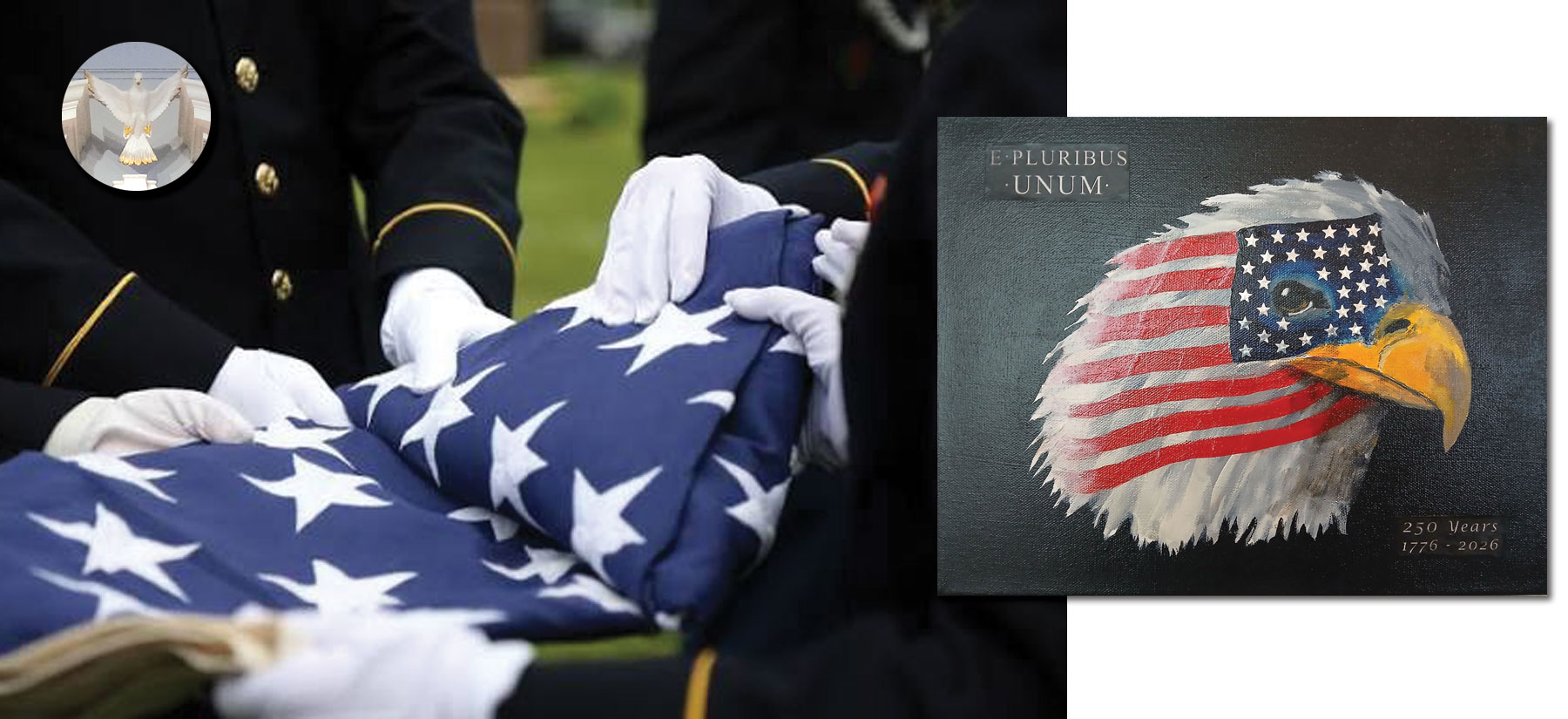
The honor guard ceremoniously folds the U.S. burial flag into a tight, traditional triangle. This is a slow process performed with great precision and respect. Be prepared to give it time.
Flag Presentation

The folded flag is presented to the primary next of kin by a military representative, accompanied by a message of condolence on behalf of the President and the branch of service. The flag is a cherished remembrance of service done well and carries the blessings of all in this country. Bravo Zulu!
How to Arrange for Military Honors
Military honors are provided free of charge for eligible veterans and active-duty service members. To schedule honors, coordinate with your local funeral director or contact the military branch directly. If the inurnment is at a national cemetery, the cemetery staff can also assist with the request.
For more information on eligibility, or to verify if your loved one qualifies for specific honors, you can visit the USAGov Military Funeral Honors Guide or consult the VA National Cemetery Administration.
At Walker Chapel, we coordinate the Military Honors with the Funeral Home selected by the family.
The Columbarium at Walker Chapel
 A Columbarium at Walker Chapel is an enduring place of remembrance, indoor or outdoor, that contains niches designed to hold either individual, companion, or family cremains in urns. Columbaria are most often located in cemeteries and may be multiple small structures for small groups or a single large structure for many. The advantages of a columbarium are that it provides long-term memorialization and is safe, supports individuals, companions, and families, and serves as a legacy site for family and friends to visit. Faith-based columbaria offer additional security of non-profit Church care and inurnment in a church cemetery. They are more expensive than informal options, in that you must obtain a Right to Inurnment License and pay a range of cemetery fees.
Moreover, the columbarium has a feeling of permanence. Designed to last for generations, the gravity-wall columbarium is intended to endure for centuries. It is on sacred grounds that make up the Walker Chapel Historic District. Arlington County’s Historic Affairs Landmark Review Board oversees the grounds and provides assistance and guidance in historic preservation while protecting them from other uses.
The Columbarium says you will not be forgotten,
and that future generations will cherish your memory
The columbarium contains companion niches for two and family niches for four to six urns depending on the size of the urns. It is the place for cremated remains and the way to honor ashes after cremation. Walker Chapel extends the memorialization as a Christian place of remembrance and a historic cemetery columbarium.
Unlike scattering, a columbarium creates a permanent place where future generations can visit, reflect, and remember together. Families often discover that having a physical destination for remembrance becomes increasingly important over time.
The Columbarium is open to all regardless of race, ethnicity, gender, religion, or wealth. The cemetery is staffed by volunteers from the Chapel congregation, is well funded, and has been an active Christian burial ground for over 150 years.
A Final Act of Honor
Military honors mark the end of a life of service, but they are not the end of remembrance.
Many families tell us that what brings them the greatest peace is knowing there will always be a place to return—a place where children and grandchildren can stand together, remember stories of service, and quietly say, “Thank you.”
If you are considering military honors for yourself or someone you love, we invite you to visit Walker Chapel Historic Cemetery and Columbarium.
Walk the grounds and see how military honors and Christian faith come together in a peaceful, historic setting. Ask every question you have. Take all the time you need.